
Accent Walls
Overview
About our accent walls
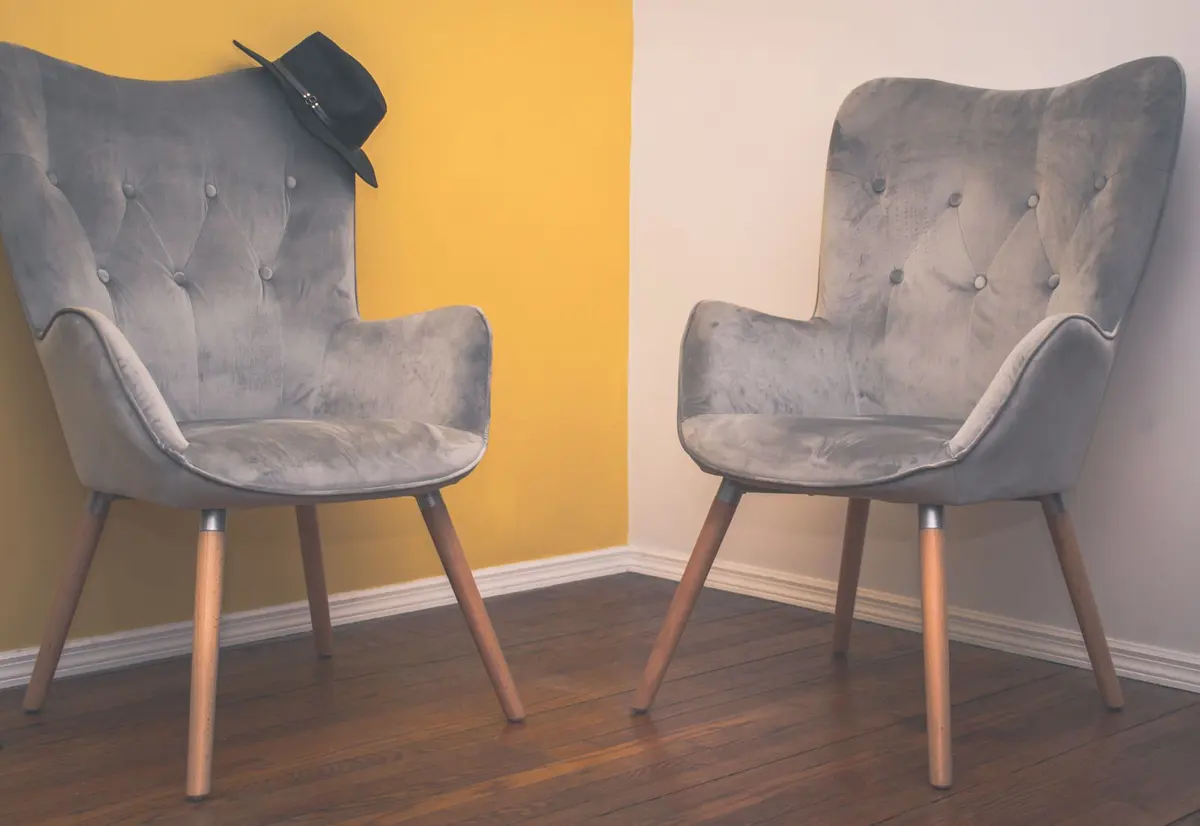
An accent wall is a color decision that depends entirely on execution. Because the new color stops at a corner, at the ceiling and at the baseboard, every one of those boundaries becomes something the eye lands on. Saturated colors also cover differently from a neutral, so deep blues, charcoals and reds usually want a tinted primer and a patient second coat to reach even depth.
Open-plan tract homes give you long stretches of continuous wall and very few natural stopping points, which makes choosing the right wall as important as choosing the color. Fireplace surrounds, the wall behind a bed, a dining nook and tall two-story entry walls are the usual candidates. Renters with written permission and homeowners testing a bolder palette both tend to start right here.
Finding the wall's real edges comes first, so the color ends at an inside corner, a change of plane or a beam and looks intentional rather than arbitrary. Sample areas get rolled up before anyone commits. Inland light is strong and very direct through the afternoon, and it pushes a color noticeably warmer than it looked on a chip held up indoors.
Licensed · Bonded · Insured — CA LIC# 1160754Inland Empire & Orange CountyFree estimates
Why it pays off
Lines That Hold Up
Corners, ceiling and trim edges are cut so the color ends in a crisp, unbroken line. On an accent wall that boundary is the detail people stand and look at closely.
Even, Deep Color
Tinted primer and full coats keep saturated colors from going patchy. Deep pigments hide poorly on their own, and skipping that step is exactly why a bold wall ends up looking streaked.
See It Before Committing
Large sample patches go up on the actual wall in the actual light, so the decision gets made in your room instead of under the fluorescent lights of a paint counter.
Small, Contained Scope
One wall is a contained project. Furniture is pulled clear, floors are covered, and the room goes back together without the rest of the house being taken apart around it.
Our process
How we approach accent walls
The order matters as much as the materials. This is the sequence we follow, and the estimate spells out which steps your job needs.
- 01
Choose the Wall
We look at where the plane actually breaks, how light moves through the room during the day, and what furniture sits against it. A color that stops mid-wall on an open plan rarely looks deliberate.
- 02
Sample on Site
Candidate colors are rolled out in sizable patches on the wall itself and viewed at morning, midday and lamp light. Paper chips and screen renderings both understate how saturation behaves at full scale.
- 03
Prep and Level
Holes are filled, patches sanded and retextured to match, and the surface checked under a raking light. A strong color exaggerates every dent, ridge and roller mark that did not get corrected.
- 04
Tinted Primer
Deep reds, blues and charcoals go over a primer tinted toward the finish color. That is how you reach even depth in two coats rather than a blotchy, streaky third one.
- 05
Cut Clean Lines
Inside corners, the ceiling line and the top of the baseboard are cut by brush, and where wall texture invites bleed the tape line is sealed first. The field is then rolled into the wet edge.
Related services
Work that usually goes with this
Most jobs touch more than one of these. Bundling them into one estimate saves a second mobilization.
Where we do it
Accent Walls across the Inland Empire & Orange County
We work out from Corona across 40 cities and communities. Pick yours for local detail, or just call and tell us the street.
Get a free estimate for accent walls
Tell us the property, the surfaces involved and anything that needs repair first. We will walk the job and put the full scope in writing. Serving the Inland Empire & Orange County.
Licensed · Bonded · Insured — CA LIC# 1160754